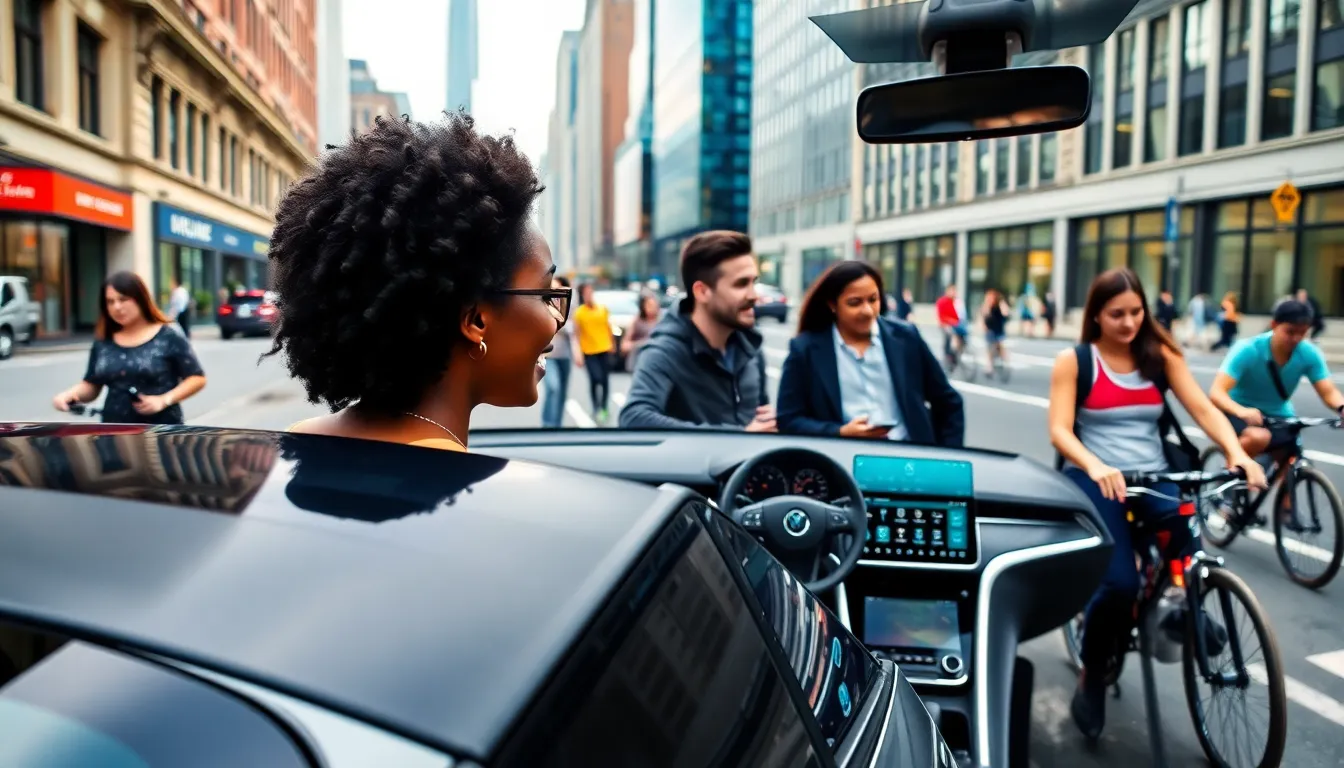
Imagine cruising down the highway while your car chats with your smartphone, orders coffee, and even gives you a heads-up about traffic jams—all without you lifting a finger. Welcome to the world of connected cars, where vehicles aren’t just machines but savvy companions that make driving feel like a scene from a sci-fi movie.
These high-tech wonders are revolutionizing how people experience the road, blending convenience and safety like never before. With features that can predict your needs and help you avoid that pesky pothole, connected cars are more than just a trend; they’re the future of transportation. Buckle up as we dive into the fascinating realm of connected cars and discover how they’re transforming our daily drives into seamless journeys.
Overview of Connected Cars
Connected cars utilize advanced technologies to enhance driver experience and vehicle functionality. These vehicles communicate with smartphones and other devices, creating a seamless ecosystem that prioritizes user convenience. Real-time data sharing enables automated features, including navigation updates and hazard alerts.
Wireless connectivity allows vehicles to access the internet, providing features like streaming music and smart assistant integration. Traffic updates are delivered instantly, helping drivers avoid congestion and arriving at their destinations faster. Additionally, connected cars often include safety features, such as automatic braking and collision warnings, significantly reducing accident risks.
These innovations highlight the integration of vehicle-to-everything (V2X) communication. This technology fosters interaction between vehicles and infrastructure, improving overall road safety and efficiency. Bold approaches in data security protect sensitive information transmitted between the vehicle and external networks.
Many manufacturers invest in developing connected capabilities. As a result, various models now include features like remote diagnostics and over-the-air updates, enhancing performance and user experience without requiring dealership visits. Industry forecasts indicate connected car sales will reach over 76 million by 2025, reflecting the strong demand for smart technologies in the automotive sector.
Each of these aspects establishes connected cars as a critical component in the evolution of transportation, offering benefits that extend beyond traditional vehicles. Features available today are paving the way for autonomous driving and smart city advancements in the near future.
Key Features of Connected Cars
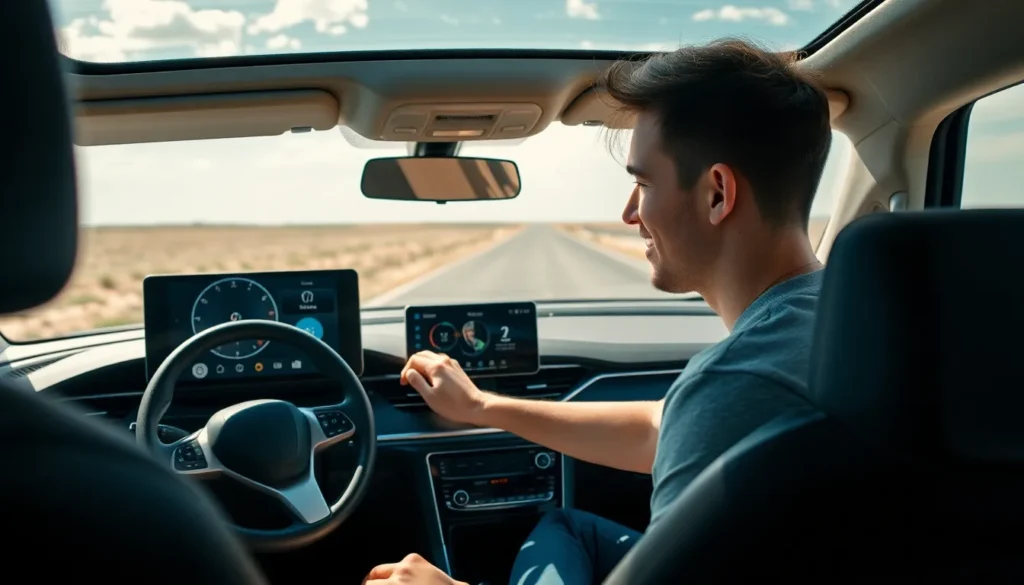
Connected cars offer innovative technologies that enhance the driving experience. They integrate various features aimed at convenience and safety, making travel more enjoyable and efficient.
Advanced Infotainment Systems
Advanced infotainment systems provide seamless access to navigation and entertainment. Drivers enjoy features like music streaming, voice commands, and individualized settings. Real-time updates ensure that the information displayed remains current, and smartphone integration keeps users connected on the go. Systems often support multiple applications, enriching the overall user experience. These capabilities position infotainment as a critical element of connected cars.
Enhanced Safety Features
Enhanced safety features significantly improve driver security. Automatic braking systems recognize sudden obstacles and react instantly to prevent collisions. Collision warning alerts provide timely notifications about potential dangers, allowing drivers to respond more effectively. Advanced sensors monitor surroundings, enhancing awareness on the road. These safety advancements lead to a substantial reduction in accidents and injuries, creating safer travel environments.
Vehicle-to-Vehicle Communication
Vehicle-to-vehicle communication facilitates real-time information exchange between cars. This technology allows vehicles to share data regarding road conditions and traffic patterns. Enhanced coordination among vehicles improves overall road safety and efficiency. Informed decisions become possible as drivers receive prompts about nearby hazards or congested routes. The implementation of this technology lays the groundwork for smarter and safer transportation systems.
Benefits of Connected Cars
Connected cars offer numerous advantages that enhance both the driving experience and safety on the road. They utilize cutting-edge technology to create a cohesive environment for drivers and passengers.
Improved Driving Experience
Enhanced connectivity elevates the driving experience significantly. Features such as real-time navigation updates and voice-command systems streamline journeys. Access to streaming services makes entertainment easily available during commutes. Drivers can interact with their vehicles using smart assistants, allowing for hands-free operation. Personalized settings improve comfort by adjusting climate control and seat positioning automatically. Overall, these innovations make every trip more convenient and enjoyable.
Increased Safety on the Road
Safety benefits from advanced technologies integrated into connected cars. Automatic braking systems can detect imminent collisions and react swiftly, minimizing impact. Collision warning alerts provide timely notifications, allowing drivers to avoid potential accidents. Vehicle-to-vehicle communication enhances safety by exchanging crucial information about road conditions and hazards. Real-time traffic alerts help drivers make informed decisions, reducing congestion and accident rates. Manufacturers emphasize these safety features, aiming to create a safer driving environment for everyone on the road.
Challenges and Concerns
Connected cars innovate the driving experience but also present significant challenges. Cybersecurity poses one of the most pressing concerns.
Cybersecurity Risks
Connected vehicles rely on complex software systems, making them vulnerable to cyber attacks. Hackers can exploit weaknesses, potentially compromising vehicle safety and user data. Several incidents have demonstrated the threats posed, including remote vehicle control and data breaches. Manufacturers prioritize the implementation of robust security protocols to safeguard against unauthorized access. They actively enhance encryption methods and software updates. However, as technology evolves, attackers continuously seek new vulnerabilities, necessitating ongoing vigilance.
Privacy Issues
Privacy concerns arise as connected cars collect extensive personal data. They gather information on drivers’ habits, locations, and preferences, raising questions about data storage and usage. In some instances, data sharing with third parties occurs without user consent, leading to potential exploitation. Laws governing data protection differ by region, complicating compliance for manufacturers. Transparency in data handling remains essential to address user apprehensions. Consumers increasingly demand clear policies regarding data privacy and protection measures. Companies must prioritize user trust to maintain competitive advantages in this evolving market.
Future of Connected Cars
Connected cars are evolving rapidly, fundamentally transforming transportation systems worldwide. Significant advancements in artificial intelligence and machine learning enhance vehicle capabilities, allowing for smarter, more responsive functions. Manufacturers increasingly invest in technologies that prioritize safety and user comfort.
Data shows that the sale of connected cars is expected to exceed 76 million by 2025, driving the automotive sector toward innovation. Enhanced features like real-time navigation and voice-command systems create personalized driving experiences while improving overall safety. Vehicle-to-vehicle communications play a critical role in sharing information about traffic and road conditions, making travel safer and more efficient.
Innovations like over-the-air updates render dealership visits for performance enhancements unnecessary. Combination of V2X communication and advanced safety features like automatic braking further elevates road safety standards. Social acceptance and adoption of connected cars hinge on addressing privacy concerns and cybersecurity risks effectively.
Seamless integration of user data is a priority for manufacturers, highlighting the importance of transparency in data handling. Customers demand assurance regarding their data security, emphasizing the need for robust encryption protocols. As technology evolves, maintaining user trust is essential for sustaining a competitive advantage in the connected car market.
Improved connectivity will lead to the development of smart cities, where vehicles interact with infrastructure. Optimizing traffic flow and reducing congestion through real-time data exchange between vehicles and traffic systems remains a crucial focus. Future vehicles will not only navigate roads but also contribute to overall urban efficiency, creating a sustainable and intelligent transportation ecosystem.
Conclusion
Connected cars are set to redefine the driving experience by merging convenience with safety. As technology advances these vehicles will continue to enhance daily commutes through real-time data and innovative features. The industry’s commitment to improving safety standards and user comfort is reshaping transportation.
However the challenges of cybersecurity and privacy must be addressed to ensure user trust. Manufacturers that prioritize transparency and robust security measures will lead the way in this evolving market. The future of connected cars promises not only smarter vehicles but also a more efficient and sustainable transportation ecosystem.