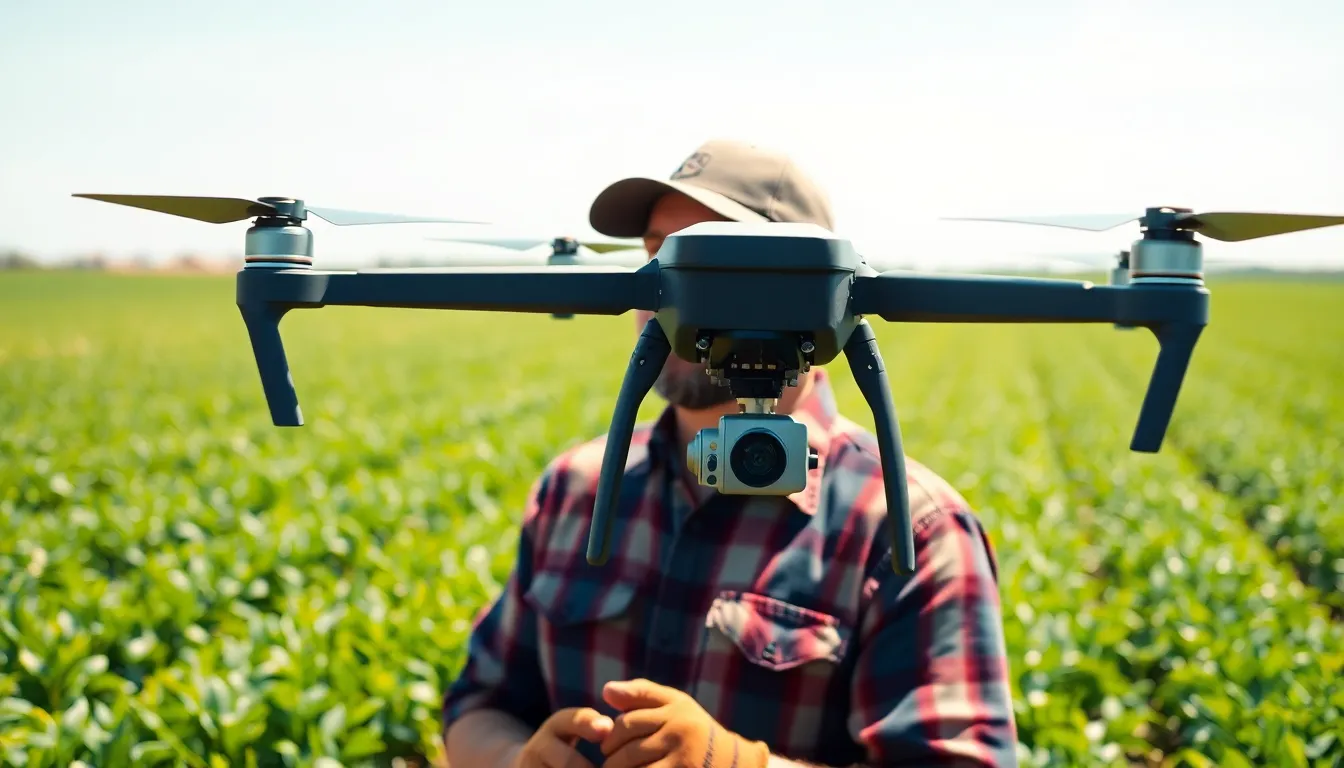
Imagine a field where crops thrive, pests flee, and farmers have more time to enjoy their morning coffee—sounds like a dream, right? Enter IoT agricultural drones, the high-flying heroes of modern farming. These tech-savvy marvels don’t just buzz around for fun; they gather data, monitor crop health, and even help optimize irrigation, all while looking cooler than a sci-fi movie prop.
Overview of IoT Agricultural Drones
IoT agricultural drones are transforming the landscape of farming. Equipped with advanced sensors, these drones collect actionable data that enhances decision-making. Monitoring crop health becomes more precise, allowing farmers to detect diseases earlier and apply targeted treatments.
Analyzing soil conditions is another critical function of these drones. They evaluate moisture levels, nutrient content, and pH balance, delivering insights that optimize resource distribution. Farmers gain the ability to tailor their interventions, reducing waste and maximizing yields.
Irrigation management receives a significant upgrade through IoT drone technology. Drones generate real-time images and data, enabling farmers to adjust water application based on specific crop needs. This precision reduces water usage while ensuring crops receive adequate hydration.
In addition to monitoring and analysis, these drones streamline the application of fertilizers and pesticides. Automating these processes minimizes human labor and increases accuracy. As a result, farmers can cover larger areas in less time.
Cost savings follow the adoption of IoT agricultural drones. Increased efficiency translates to lower operational costs, which enhance profitability. Data-driven decisions reduce unnecessary expenditures, fostering sustainable farming practices.
Connectivity plays a vital role in the functionality of IoT drones. Equipped with internet access, they share information seamlessly with farm management systems. This integration supports the ongoing optimization of farming operations.
As technology evolves, the role of IoT agricultural drones continues to expand, providing farmers with tools that improve productivity and sustainability. The incorporation of these drones signifies a shift towards more precise, efficient, and environmentally conscious agricultural practices.
Features of IoT Agricultural Drones
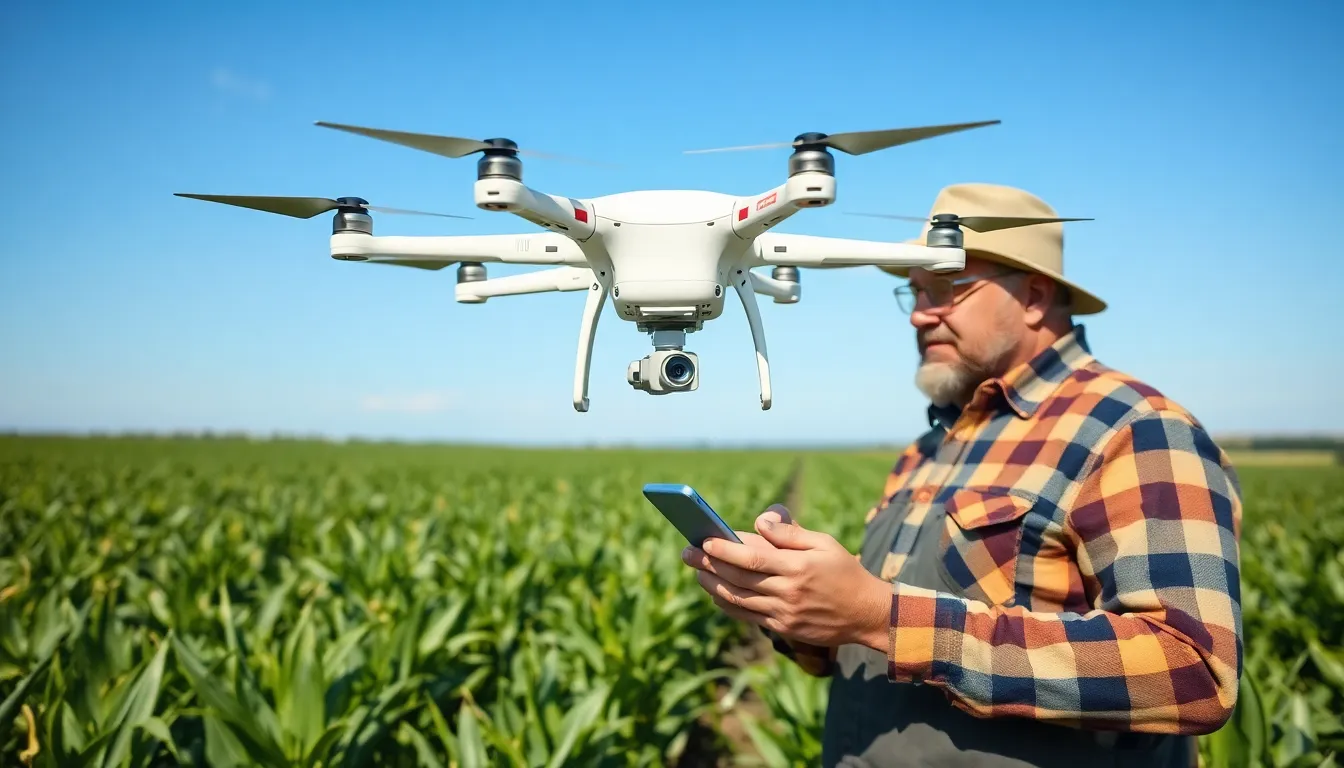
IoT agricultural drones boast several innovative features that enhance modern farming practices significantly. These capabilities allow farmers to achieve greater efficiency and sustainability.
Advanced Sensors
Advanced sensors on these drones gather critical data about crop health and environmental conditions. Multispectral sensors measure light reflectance, which indicates plant health. Thermal sensors assess temperature variations, highlighting areas needing irrigation or cooling. Additionally, humidity sensors track moisture levels, ensuring that farmers apply the right amount of water. Various sensor arrays enable comprehensive soil analysis, assessing nutrient content and pH balance. With this data, farmers can make informed decisions to optimize interventions, leading to healthier crops and improved yields.
Real-Time Data Analytics
Real-time data analytics form a crucial aspect of IoT agricultural drones. Instant data processing allows farmers to respond quickly to changing conditions. They receive valuable insights from aerial imagery, enhancing their understanding of field variations. Geographic information systems (GIS) integrate with drone data, providing spatial analysis to identify trends over time. Algorithms analyze collected data to predict potential issues like pest infestations or nutrient deficiencies. Such analytics empower farmers to implement timely interventions, reducing resource waste and ensuring effective crop management.
Advantages of Using IoT Agricultural Drones
IoT agricultural drones offer numerous advantages that significantly enhance farming practices. Their incorporation leads to improved operational outcomes and sustainability in agriculture.
Increased Efficiency
Farming operations benefit from increased efficiency through timely data collection and analysis. Drones provide real-time aerial insights, helping farmers identify and address crop issues quickly. This rapid response capability fosters better resource allocation and minimizes waste. Automating tasks like irrigation and pesticide application leads to faster operations, letting farmers cover larger areas in shorter timeframes. Enhanced monitoring tools enable precise assessments of soil conditions and crop health, ensuring optimal interventions based on detailed data. Thus, farmers streamline their workflows and optimize productivity effortlessly.
Cost Reduction
Cost reduction emerges as a key benefit of utilizing IoT agricultural drones. Efficient data usage reduces unnecessary expenditures by targeting only areas that require intervention. Farmers save money on resources such as water, fertilizers, and pesticides due to precise application methods offered by drones. The technology minimizes labor costs by automating tasks that previously required manual labor. Additionally, earlier disease detection facilitated by drones prevents crop loss, preserving profits. Overall, data-driven practices contribute to improved financial outcomes and sustainability within the agricultural sector.
Challenges in Implementing IoT Agricultural Drones
IoT agricultural drones face several challenges that can hinder their widespread adoption in the farming industry. Key issues include technical barriers and regulatory compliance.
Technical Barriers
Developing and integrating advanced technologies proves complex for many farmers. Technical expertise often remains limited within rural communities, which can restrict the effective use of these drones. Connectivity issues arise from poor infrastructure, impacting the reliability of data transmission. Moreover, the high costs of initial investments and ongoing maintenance can deter many farmers from adopting this technology. Limited understanding of data interpretation also challenges farmers in fully utilizing the insights gathered by drones. In combination, these technical barriers hinder the optimization of IoT agricultural drones in farming.
Regulatory Issues
Regulatory frameworks often lag behind technological advancements within the drone industry. Farmers encounter challenges such as strict airspace regulations and licensing requirements, which can complicate operations. Compliance with safety standards and privacy concerns creates additional hurdles that farmers must navigate. Varying rules across states can also lead to confusion regarding drone usage in agriculture. Many farmers may struggle to stay informed on the latest regulations, impeding their ability to leverage drone technology effectively. These regulatory issues significantly impact the integration of IoT agricultural drones into farming practices.
Future Trends in IoT Agricultural Drones
Emerging technologies continue to reshape the landscape of IoT agricultural drones. Increased integration of artificial intelligence strengthens data analysis capabilities. Enhanced machine learning algorithms enable drones to make autonomous decisions based on real-time data, improving efficiency in farming practices.
Furthermore, the shift towards more sophisticated sensors is evident. New sensor technologies provide even deeper insights into soil health and crop conditions. Advanced imaging techniques, such as LiDAR, are being incorporated for precise topographical mapping. This integration allows for tailored farming practices, ultimately promoting higher yields.
In addition, connectivity advancements play a crucial role in the future of these drones. Better satellite and cellular networks enhance data transmission capabilities. Drones can share critical information seamlessly with farm management systems, creating a comprehensive ecosystem for farmers. This connectivity fosters collaboration among various agricultural stakeholders, from suppliers to consumers.
Automated drone swarm technology is also gaining traction. Groups of drones working together effectively cover larger areas in less time. They can coordinate their actions without human intervention, maximizing efficiency in tasks such as planting, monitoring, and spraying.
Sustainability remains at the forefront of agricultural drone development. Increasing focus on eco-friendly practices encourages farmers to reduce chemical use and conserve resources. Drones equipped with precision application capabilities minimize waste, promoting environmentally friendly agriculture.
Lastly, regulatory frameworks are evolving to support drone technology. Policymakers are recognizing the importance of agricultural innovation and are creating guidelines that facilitate safe drone operations. This proactive approach addresses challenges such as airspace regulations and licensing, ensuring farmers can harness the full potential of IoT agricultural drones.
Conclusion
The integration of IoT agricultural drones is revolutionizing farming practices by enhancing efficiency and sustainability. These drones empower farmers with real-time data, enabling informed decision-making that leads to optimized resource use and increased yields. As technology continues to evolve, the potential for greater automation and improved data analytics will further transform agricultural operations.
Despite the challenges surrounding implementation, the ongoing advancements in connectivity and sensor technology promise to unlock new opportunities for farmers. Embracing IoT agricultural drones not only supports profitability but also fosters environmentally conscious farming methods. The future of agriculture is bright with these innovations at the forefront, paving the way for smarter and more sustainable practices.